I encountered a powerful and unsettling question this week. It is a question Jews have asked in many forms throughout history, but one of its sharpest formulations appears in the Beis Elokim of the Mabit.[1]
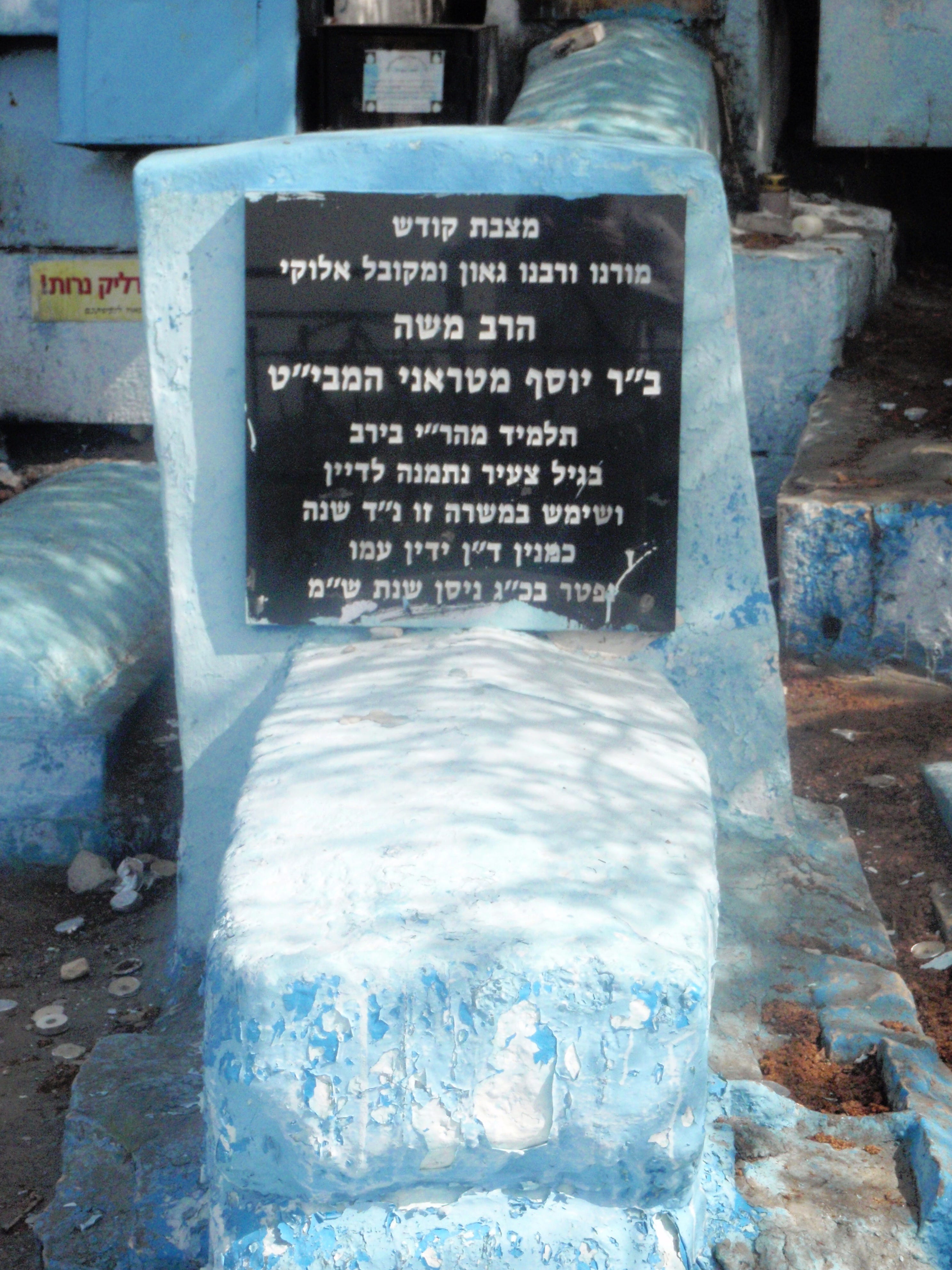
Here is how the problem goes. If we truly believe in tefillah, and if for centuries Jews have prayed three times a day in every corner of the world for redemption, then why has the redemption not yet come? If prayer has the power we claim it has, then why are we still waiting? Does the ongoing absence of the final geulah cast doubt on our belief in prayer, or on redemption itself?
The Mabit offers several answers. But one in particular resonated with me, especially this week.
Perhaps we think about redemption too narrowly. We tend to view it in binary terms. Either we are redeemed or we are not. Either Mashiach has come or he has not. Either the prayer worked or it did not.
But real life is rarely binary. Reality is more textured than a simple yes or no.
The Mabit suggests that perhaps our tefillos have indeed been answered, just not always in the final and ultimate form for which we yearn. Perhaps the prayers of generations did not yet culminate in the complete geulah, but they did bring countless redemptions along the way.
Jewish history is filled with enemies who sought our destruction. Crusades, expulsions, pogroms, inquisitions, massacres, genocidal regimes. Again and again, Jews were threatened, cornered, and hunted. And yet again and again, Jews survived. Again and again, there were deliverances. Sometimes sweeping, sometimes partial, sometimes quiet, sometimes astonishing. We have prayed for redemption, and in many ways we have been redeemed, over and over again.
That does not mean the story is complete. It is not. The world is still broken. The final redeemer has not yet come. But it may mean that our scale is too narrow if we count only the ultimate redemption and ignore the many redemptions that came before it.
This idea became vivid for me this week in a way I will not forget.
At the communal Yom Hazikaron and Yom Haatzmaut program in the Five Towns this year, 5786, we hosted Segev Kalfon. Segev is one of the hostages who spent more than 700 days in the hell of Hamas captivity. For well over a year he was underground in a terror tunnel, deprived of basic food, subjected to beatings, and brutalized in ways that are difficult even to describe.
And then he stood in front of us.
Alive.
Speaking.
Reflecting.
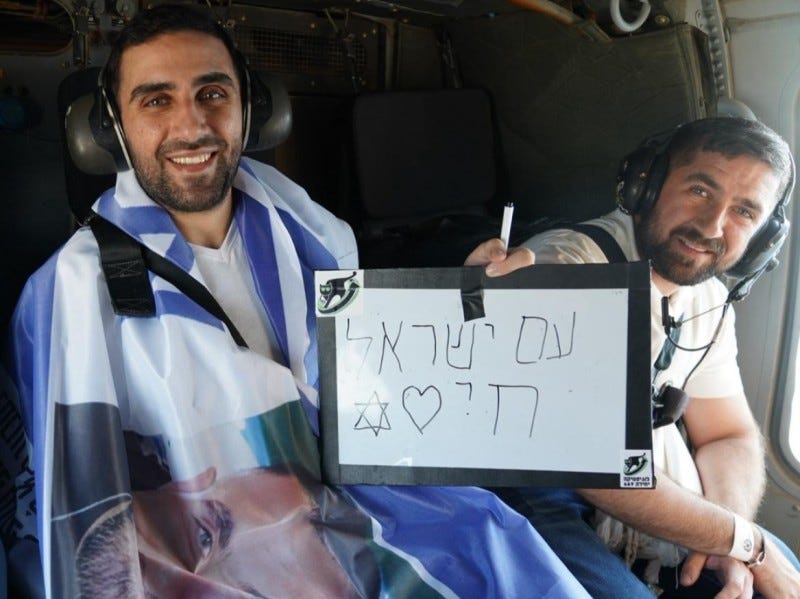
He spoke about his prayers for another chance. He spoke about what he endured and about how the experience changed his perspective. As I listened, the Mabit’s insight came to life before my eyes.
For over two years, Jews across the world poured out their hearts for the hostages. In shuls, in schools, at tehillim gatherings, at Shabbos tables, in private tears and public prayer, the Jewish people cried out for their brothers and sisters. Which community did not daven? Which congregation did not say tehillim? Which heart was not broken by the thought of Jews trapped in the hands of savage murderers?
And one could ask, painfully and honestly: where did all those prayers go?
This week I felt the answer standing in front of me.
Those prayers were not abstract. They were not lost. They were not wasted. They were embodied in a living person who had emerged from darkness and returned to life. As Segev stood before us, speaking in his own voice, I felt that I was seeing tefillah take form. Not theoretical tefillah. Not deferred tefillah. Visible tefillah. Tangible tefillah. Answered tefillah.
We often imagine that unless redemption is absolute, it is not redemption at all. But perhaps that is too crude a measure.
Perhaps we need to recalibrate the scale.
Perhaps faith requires us not only to wait for the final geulah, but also to notice the geulos already granted. To recognize the salvations in front of us. To train ourselves to see that Hashem’s answers sometimes arrive in stages, in fragments, in moments that are incomplete but still holy.
We are still waiting for the final redemption. We must keep praying for it with all our heart. But we should not fail to recognize the redemptions we have already seen. Sometimes the answer to our prayers is standing right in front of us.
[1] Rabbi Moshe ben Yosef di Trani was a student of Rabbi Yaakov Beirab and was part of the kabbalistic circles of 16th-century Safed. He was appointed that community’s rabbi at the age of 20 and continued in that role for the next 55 years.