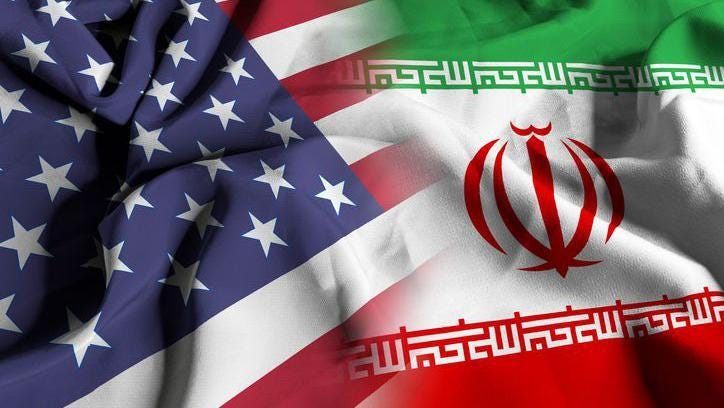
Déjà Vu: Eleven Years Apart
This past week took me back eleven years. In July 2015, the Obama administration finalized the JCPOA — the Joint Comprehensive Plan of Action — a deal promoted as a landmark diplomatic achievement that would welcome Iran back into the community of nations. In reality, it was a deeply flawed agreement. It rehabilitated Iran’s economy, restored its international standing, and provided no meaningful check on its sponsorship of terror. The consequences were devastating: the emboldening of Hizballah, the rise of Hamas, the October 7th massacre, the Houthi threat, and Iranian proxy violence across the region.
The Jewish community fought hard against that deal. We lobbied, we advocated, we argued — loudly and clearly — that no deal is better than a bad deal. We were not heard.
And now, eleven years later, here we are again.
A New Deal, the Same Problems
This week, President Trump signed a memorandum of understanding with Iran — a preliminary agreement to end the recent conflict, reopen the Strait of Hormuz, and enter sixty days of nuclear negotiations. It was signed without securing meaningful concessions from Iran, and it contains provisions that effectively pressure Israel to stand down against the very enemies sworn to destroy it.
This is remarkable — and sobering — for a specific reason. Eleven years ago, when Barack Obama was pushing through the JCPOA, Donald Trump was a vocal critic. He condemned the deal in the strongest terms, calling it one of the worst agreements ever negotiated. He was right. And yet now, sitting in the very seat he once criticized, he has signed a deal that echoes many of the same failures: insufficient Iranian concessions, political cover for a terror-sponsoring regime, and pressure on Israel to accept terms that compromise its security.
Both deals, signed by presidents of opposite parties, share a common thread: Israel was thrown under the bus.
Why This Is Actually a Moment of Hope
And yet, I believe this moment carries within it a profound and important message — one of hope, not despair.
Tehillim teaches us: “Al tivtechu bin’divim — Do not place your trust in princes” (Tehillim 146:3). Do not rely on those powerful figures whom you imagine will be your saviors. When we place our faith entirely in human beings — however capable, however well-disposed toward us — we set ourselves up for disappointment, because no human being is the ultimate guarantor of Israel’s fate.
The past several months gave rise to a dangerous dynamic. When America entered the conflict alongside Israel, there was enormous relief — and there should have been. American support was genuinely significant. But in the wake of that support came something unhealthy: a sense that Israel’s destiny was intertwined with the goodwill of an American president. And when economic pressures mounted, and blame began to be directed at Israel and at Jews for “forcing” America into a Middle Eastern war, that dynamic revealed its fragility.
Putting all our eggs in the basket of human beings — of any human being, Democrat or Republican — is a mistake. Not merely a strategic mistake. A theological one.
The Deeper Lesson: Am Levadad Yishkon
Bil’am declared: “Hen am levadad yishkon — Behold, it is a people that dwells alone” (Bamidbar 23:9). This is not a description of loneliness or abandonment. It is a statement of singular destiny: the Jewish people’s fate does not ultimately hinge on the calculations of any foreign power.
We do everything in our power to advocate for Israel. We lobby. We build relationships. We create partnerships. These efforts are real, they matter, and we must not abandon them. But all of it must rest on a foundation of clarity: it is the Almighty who directs the fate of the Jewish people, working through many messengers — but ultimately, it is He alone.
The unhealthy dynamic runs in both directions. It is not good for the American people to believe that Israel is dependent on an American president. And it is certainly not good for us, as Jews, to believe it ourselves. When we internalize that dependency, we lose our spiritual grounding. We become anxious when a president shifts position, elated when he supports us, and shattered when he does not. That is no way to live. And it is not who we are.
Paving the Way for the True Redemption
What this moment teaches us — what it forces us to reckon with — is that the path to Israel’s real and lasting security does not run through Washington. It never did. Democrat presidents and Republican presidents alike have, at critical moments, made choices that compromised Israel’s welfare. The lesson is not that we abandon politics or diplomacy. The lesson is that we hold them in their proper place.
The acknowledgment that it is not human beings who control the fate, the legacy, and the destiny of the nation of Israel — that it is the Almighty, through His many messengers, but ultimately He Himself — is not a counsel of passivity. It is the foundation of genuine redemption. It is what will pave the way for real and final redemption. May we have the wisdom to see it clearly, and the faith to act on it.