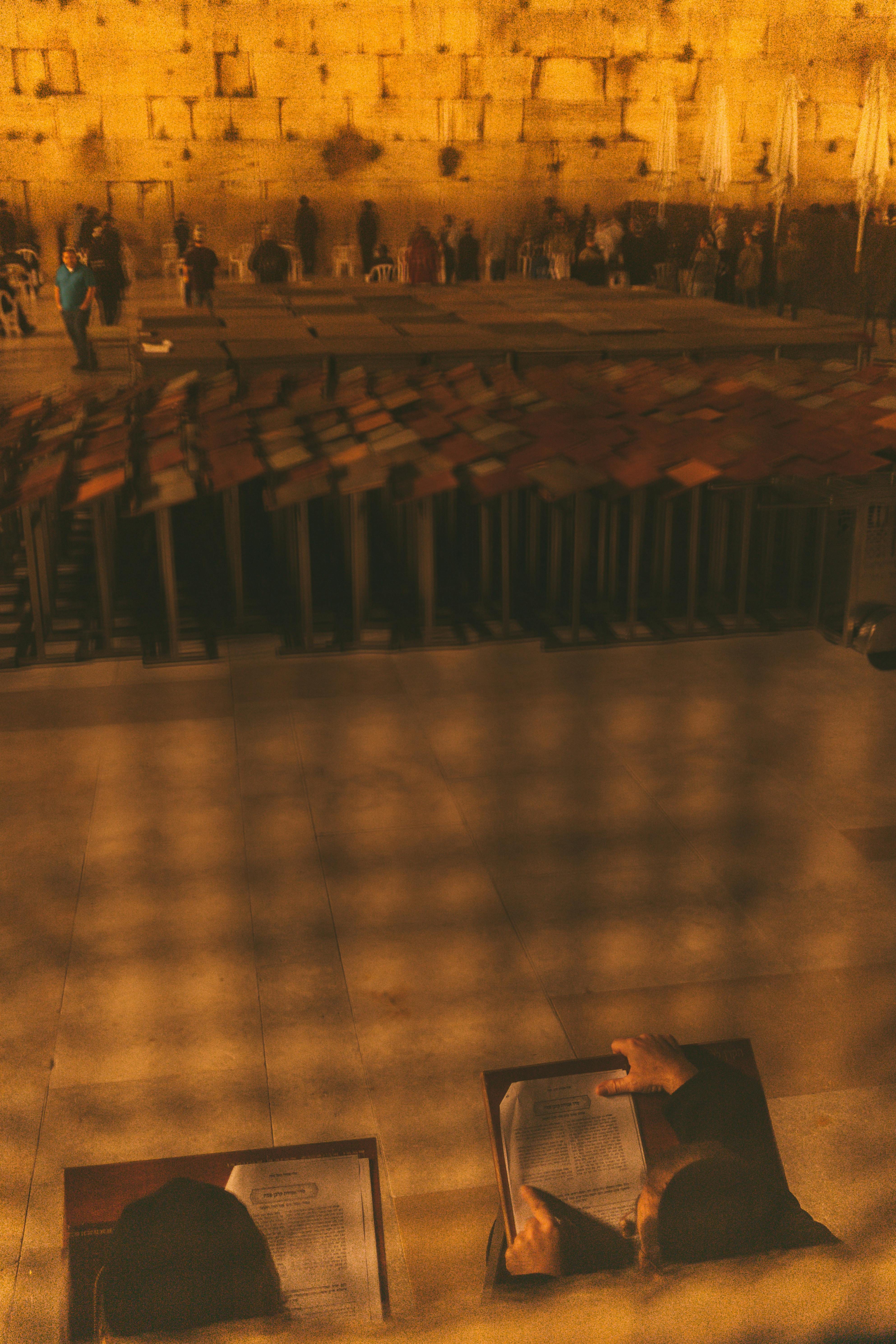
It is the most famous Friday night song. It is Lecha Dodi - the song of Shabbos, the melody that ushers in the queen, the poem that helps us leave the week behind. This beautiful poem was written by Rav Shlomo Alkabetz of Tzfat in the sixteenth century.
But here is the funny thing - most of Lecha Dodi is not actually about Shabbos at all.
The opening and closing stanzas speak directly about Shabbos. But six of the nine stanzas turn instead to the exile and redemption of Yerushalayim. Rav Alkabetz seems to be teaching us that Shabbos to the Jewish people in time is what Yerushalayim to the Jewish people in space.
Shabbos gives the Jewish people a refuge from the noise of the world. It restores our inner compass. It reminds us what matters, what is sacred, what is eternal, and what is only urgent for the moment. Yerushalayim does the same, but not in time. Yerushalayim does it in space. It is the place where the Jewish people remember who they are, where they came from, and where history is meant to leading.
One stanza captures this beautifully:
Hisna’ari mei’afar kumi. Livshi bigdei tifarteich ami.
“Shake off the dust and rise. Wear the garments of your splendor, My people.”
The language echoes Yeshayahu (52:1), where Yerushalayim is called upon to clothe itself in splendor. But Rav Shlomo Alkabetz adds one crucial word: ami, “My people.” The garments of Yerushalayim are the Jewish people. When the Jewish people return to Yerushalayim, the city is dressed again in its true grandeur.
This is not only poetry. It is history. For centuries, Yerushalayim was mourned more than it was visited. Travelers in earlier generations often described it as impoverished, neglected, and desolate. But when the Jewish people returned, Yerushalayim came alive again. Today it is once again a center of Torah, culture, prayer, memory, and Jewish destiny. Its stones did not change. Its soul was waiting for its children.
That is what we celebrate on Yom Yerushalayim.
This year, 2026, marks the fifty ninth anniversary of the reunification of Yerushalayim in 1967. It is the anniversary of a moment when Jews could once again walk freely to the heart of our ancient city. It is the day we remember that Yerushalayim is not a symbol from the past. It is the living heart of the Jewish people.
And this year, the timing carries another layer.
In its Jewish American Heritage Month proclamation, the White House called on American Jews to celebrate faith and freedom, especially on Shabbos, in honor of America’s 250th year.
From sundown on May 15 to nightfall on May 16, friends, families, and communities of all backgrounds may come together in gratitude for our great Nation. This day will recognize the sacred Jewish tradition of setting aside time for rest, reflection, and gratitude to the Almighty.
In a country built on religious liberty, the public recognition of Shabbos as a day of rest, gratitude, faith, family, and moral reflection is not small. It reminds us that Shabbos is not only a private ritual. It is a testimony to humankind about holiness and a higher calling.
So this Shabbos, as we stand between Shabbos and Yom Yerushalayim, between holy time and holy place, we have a rare opportunity.
Let this Shabbos be a time of return.
Return to family.
Return to prayer.
Return to community.
Return to the deeper self that often gets buried beneath the dust of the week.
And return, in heart and aspiration, to Yerushalayim.
Lecha Dodi is not off topic when it turns from Shabbos to Yerushalayim. It is telling us the whole story. The Jewish people need both. A sacred day and a sacred city. A refuge in time and a home in space.
May this Shabbos help us taste both.