The Noise That Would Not Go Away
In 1964, a remarkable thing happened at Bell Labs in Holmdel, New Jersey. Two radio astronomers were at work there. Arno Penzias had been born in Munich in 1933 and, as a young Jewish child, fled Nazi Germany with his family, eventually settling in New York. Robert Wilson, born in Houston, Texas in 1936, had earned his doctorate at Caltech. Together they were using a twenty foot horn antenna, originally built for satellite communication, to study radio signals from space. The antenna was extremely sensitive, and they kept running into a problem: a faint, persistent hiss of background noise that came from every direction, day and night, regardless of where they pointed it.
At first they suspected the pigeons that had nested inside the antenna. They removed the pigeons, cleaned out the mess, and tried again. The noise remained. The pigeons came back; this time they were disposed of for good. Still the noise persisted.
Finally, they realized what it was. Not far away at Princeton University, physicist Robert Dicke and his team had predicted that a Big Bang would leave behind a faint glow of microwave radiation filling the entire universe, and they were building an instrument to search for it. When Penzias called Dicke to describe the mysterious noise, Dicke understood immediately. That noise was the cosmic microwave background radiation, the afterglow of the Big Bang. Penzias and Wilson published their findings in 1965.
Scientists had already observed that the universe is expanding. An expanding universe implies that, traced backward, it began at a single point. There was a moment of creation. There was a beginning. To confirm this, scientists predicted that such a beginning, an initial burst of energy and matter expanding outward, would have left behind a faint background radiation. In 1964, it was found.
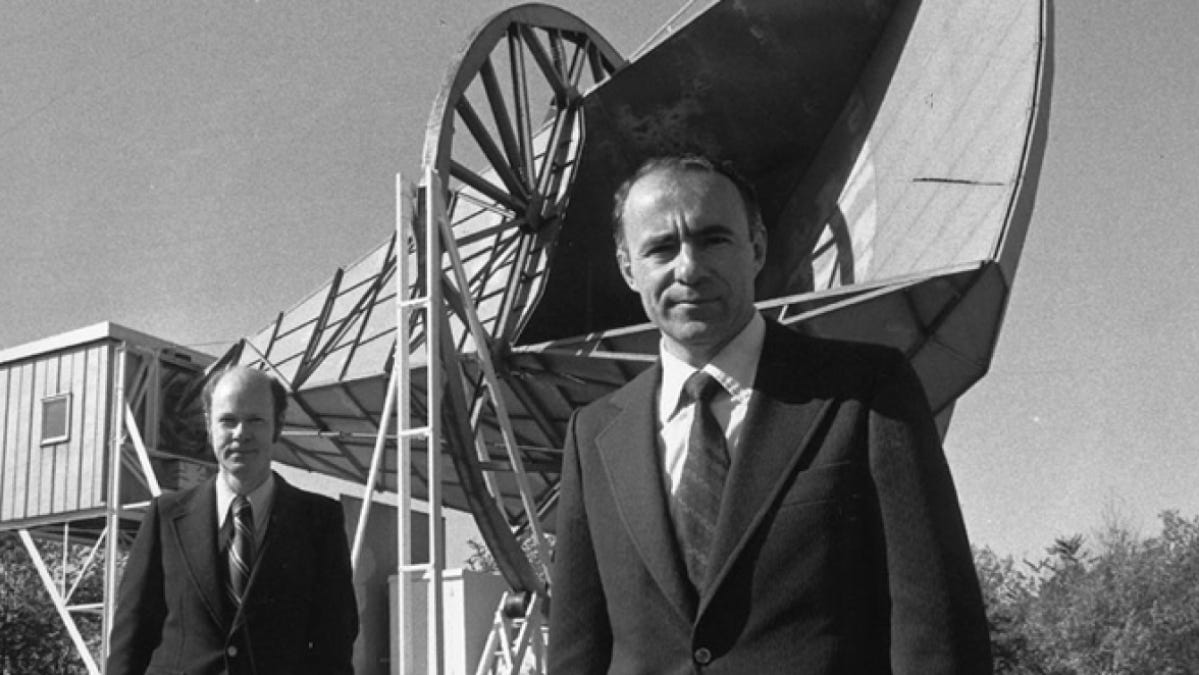
Before this discovery, the scientific world was divided into two camps. The Steady State camp held that the universe always existed. The Big Bang camp held that there was a singular moment of beginning. After the discovery, for which Penzias and Wilson received the Nobel Prize in 1978, most scientists accepted that there had indeed been a Big Bang, a moment of creation.
What is fascinating is the response of those who did not. The great astronomer Fred Hoyle, a leading advocate of the Steady State theory, wrote:
“The passionate frenzy with which the big bang cosmology is clutched to the corporate scientific bosom evidently arises from a deep-rooted attachment to the first page of Genesis, religious fundamentalism at its strongest.”
Unwilling to concede a moment of creation, Hoyle and his colleagues continued to revise their model to accommodate the evidence rather than accept a beginning.
The Heavens Falling
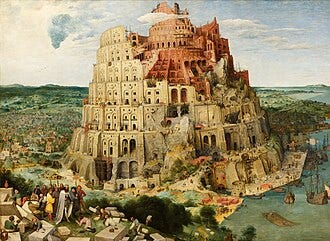
This reaction is not new. It takes us back to the Torah itself. The eleventh chapter of Bereishis introduces the building of the Tower of Bavel with the words: “The whole earth was of one language and of devarim achadim, singular matters.” What does devarim achadim mean?
Rashi offers several explanations. The last is the most intriguing. The people of that generation said: once every 1,656 years the heavens become unstable and collapse, as they did in the days of the Flood. Let us build support for them. And so they built the tower.
At first glance this makes no sense. If the sky is going to fall, will a tower hold it up? Will a building stop the rain? But on reflection, it makes a great deal of sense.
The Flood was a message to all of humanity: a life of corruption and moral anarchy carries consequences. There is a God in heaven who holds humanity accountable, and when humanity descends into violence and chaos, there will be repercussions. The world was destroyed and, in a sense, created anew.
Living with that truth carries deep religious implications. After the Flood, I must think differently about how I conduct myself, because the Flood taught me that God cares. But if I do not want to live knowing that God cares, I will invent a theory to escape that implication. I will say: yes, in the year 1656 from creation there was a cataclysm called the Flood, but these things simply happen. In another 1,656 years it may well happen again. It carries no religious or moral meaning for my life.
That is what the generation of the tower was saying. They were sidestepping the responsibility of seeing God in their lives, sidestepping a message that was clear and immediate.
The Rambam, more than 800 years ago, fought vigorously against the Greek doctrine of kadmus ha’olam, that the world always existed. What the Rambam would have given to stand in that laboratory in New Jersey and watch science finally arrive at the conclusion that there was a moment of creation. Yet even that was not enough for those who do not want to live under the watchful care of the Almighty, knowing that actions matter, that morality is answerable, and that our purpose here is more than to eat, drink, and be merry.
Each of us faces this choice. A harrowing event, a joyous event, a loss, a moment of despair: these are moments when God reaches into our lives. We can respond by saying, I am going to change the way I act and live. Or we can say, it was just something that happens.
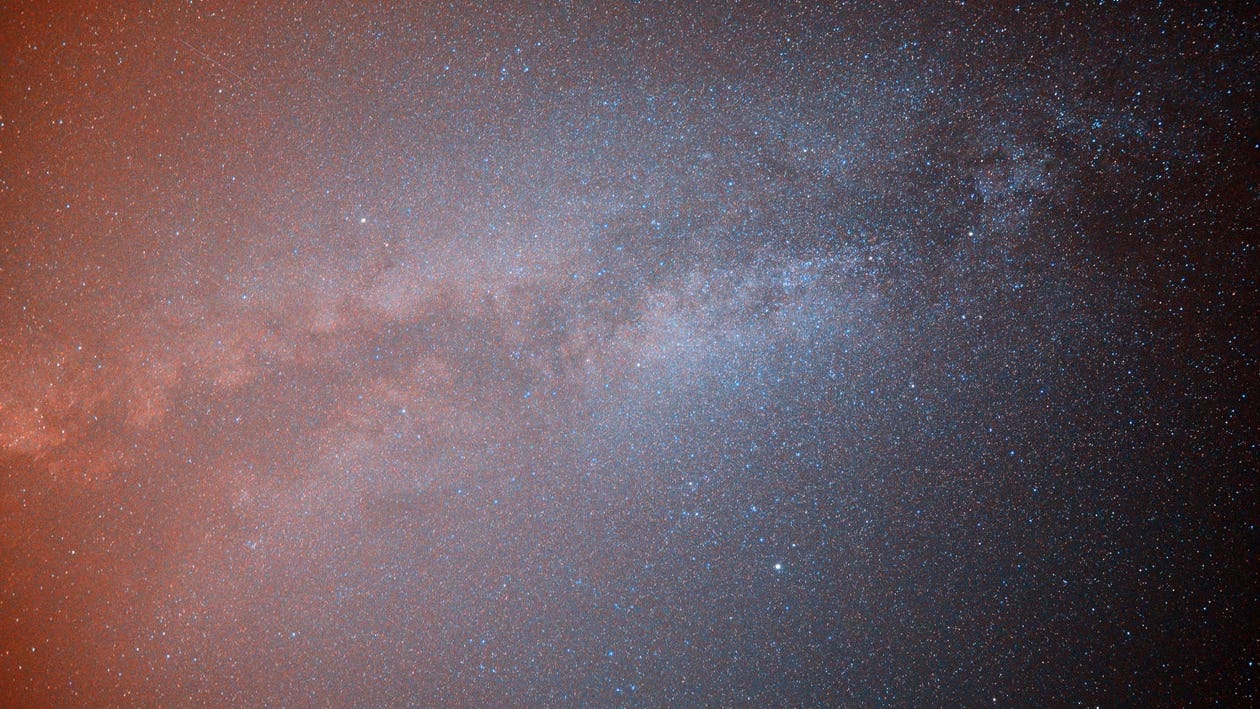
Picture Credit: Photo by Jason Pittman from Pexels
By Pieter Brueghel the Elder - Levels adjusted from File:Pieter_Bruegel_the_Elder_-_The_Tower_of_Babel_(Vienna)_-_Google_Art_Project.jpg, originally from Google Art Project., Public Domain, https://commons.wikimedia.org/w/index.php?curid=22179117