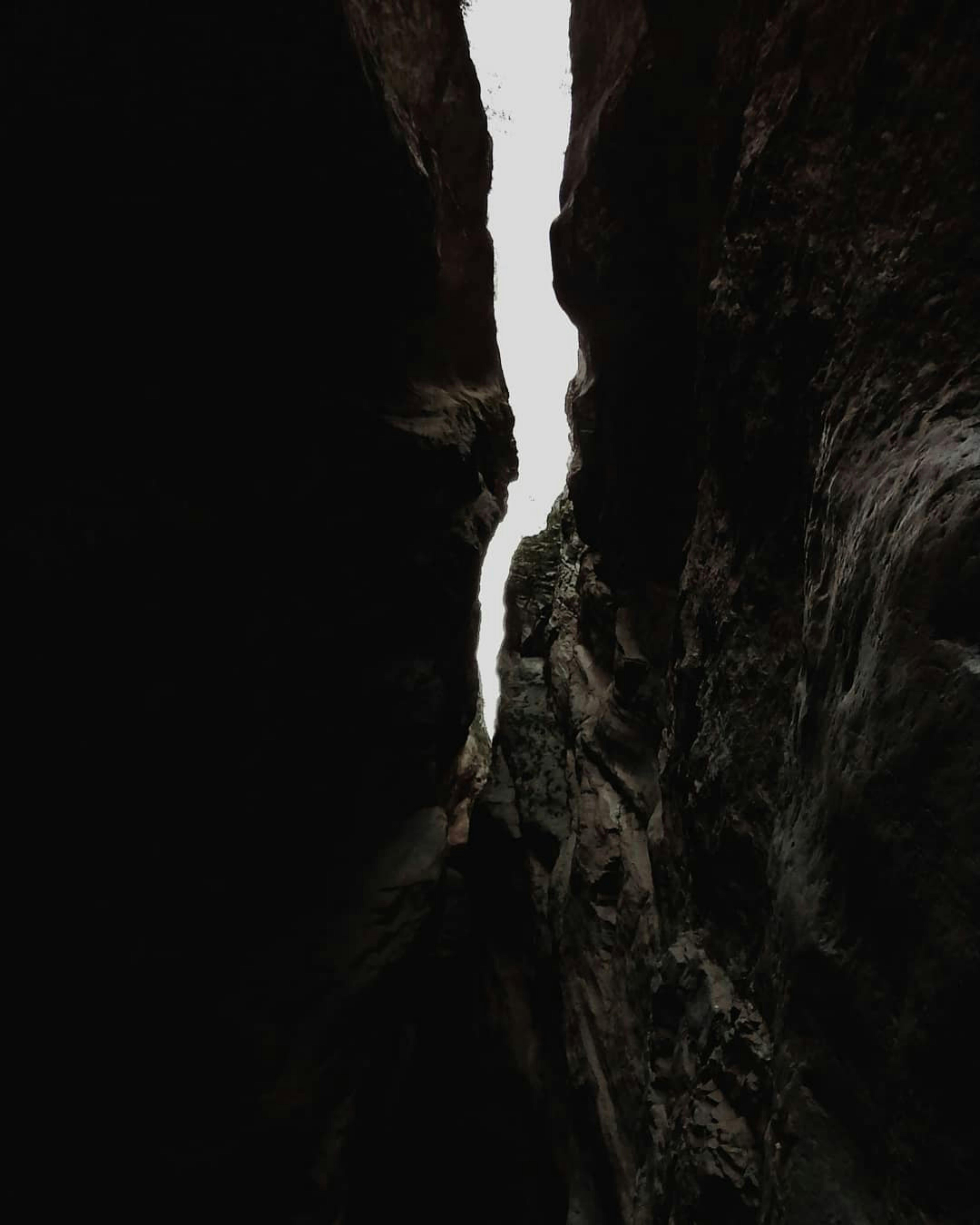
The Brackets in the Torah
Open a Torah scroll to this week’s parsha, Beha’aloscha, and you will notice something unusual. Two verses in the tenth chapter of Bamidbar are physically bracketed off from the rest of the text. They are set apart by a special symbol, the nun hafucha (an inverted letter nun), placed before and after them, like parentheses. The verses read: “When the Ark would travel, Moses said: Arise, God, and let Your enemies be scattered, let those who hate You flee from before You. And when it rested, he said: Return, God, to the myriads of thousands of Israel.”
Why are these two verses bracketed off?
Breaking Up Bad News
Rashi, the eleventh century French commentator, explains that these brackets serve as a separator between two instances of puranus. He is quoting the Talmud in Shabbos (116a), which identifies the surrounding sections: the first puranus is the verse “they traveled from the mountain of God,” which the Talmud reads as describing Israel’s turning away from God; the second puranus is the opening of the very next chapter, “the people were as if complaining.”
The bracket, then, is a deliberate interruption. The Torah inserts a soaring moment of triumph between two episodes of failure.
We tend to translate puranus as “punishment.” But the word comes from the root lifroa, meaning payment or retribution. The more precise meaning points not just to the punishment itself, but to the behavior that warranted it. The Torah is not merely separating two bad outcomes. It is separating two failures of character.
Which raises the obvious question: what exactly was the failure?
The Narrowness Behind Every Complaint
The Israelites, in the surrounding sections, are complaining. The complaints themselves were not irrational. They needed to move. They needed food and water. They needed meat. From a certain angle, each grievance was legitimate.
And yet the Torah treats these complaints as a form of spiritual failure.
I believe every complaint shares one thing in common. It comes from a narrow place, what the Chassidic tradition calls mochin de’katnus, literally “small-mindedness” or constriction of consciousness. When a person complains, their focus has collapsed to a single point of irritation. That one thing, whatever it is, has crowded out everything else.
The traffic is unbearable, but hundreds of other people have equally legitimate reasons to be on that road. It is raining and the picnic is ruined, but the crops that fill the grocery stores are drinking. The speech ran long, but someone in the room was nourished by every word. The complaint is not necessarily wrong on its own terms. It is wrong because it mistakes a sliver of reality for the whole picture.
The Bracket as a Wake-Up Call
This is what the Torah is teaching through the brackets.
Here are the Israelites, again, narrowed into their grievances. And then, suddenly, the Ark moves. Moses cries out to God. Enemies are scattered. Something enormous is happening, something that dwarfs every complaint on the list.
This is the experience the Torah calls mochin de’gadlus, expansiveness of mind. For one moment, the Israelites are forced to look up. The petty frictions of the journey are still real, but they are suddenly visible for what they are: a thin slice of a much larger story.
The bracket is not decorative. It is a therapeutic intervention. God is inserting a moment of grandeur between two episodes of smallness to say: look at what is actually happening here. Look at what I am doing for you. Then return to your complaints, if you still feel the need.
What We Do With That Moment
Rabban Shimon ben Gamliel, quoted in the Talmud, makes a remarkable claim: this bracketed section does not truly belong where it is. It will eventually be “uprooted” and placed in its correct location in the text. For now, it is here for one reason only. To interrupt. To create a pause between two failures of vision.
There are moments in every life, and in the life of every nation, when something breaks through the small concerns of the day and forces a reckoning. A birth. A death. A moment of collective danger or collective grace. Those are the brackets God places in the text of our lives.
The question is never whether the interruption will come. It always does. The question is what we do with it before we fall back asleep.
Picture credit: Photo by Torie Roman from Pexels: https://www.pexels.com/photo/low-angle-shot-of-gray-rocky-mountain-8876638/