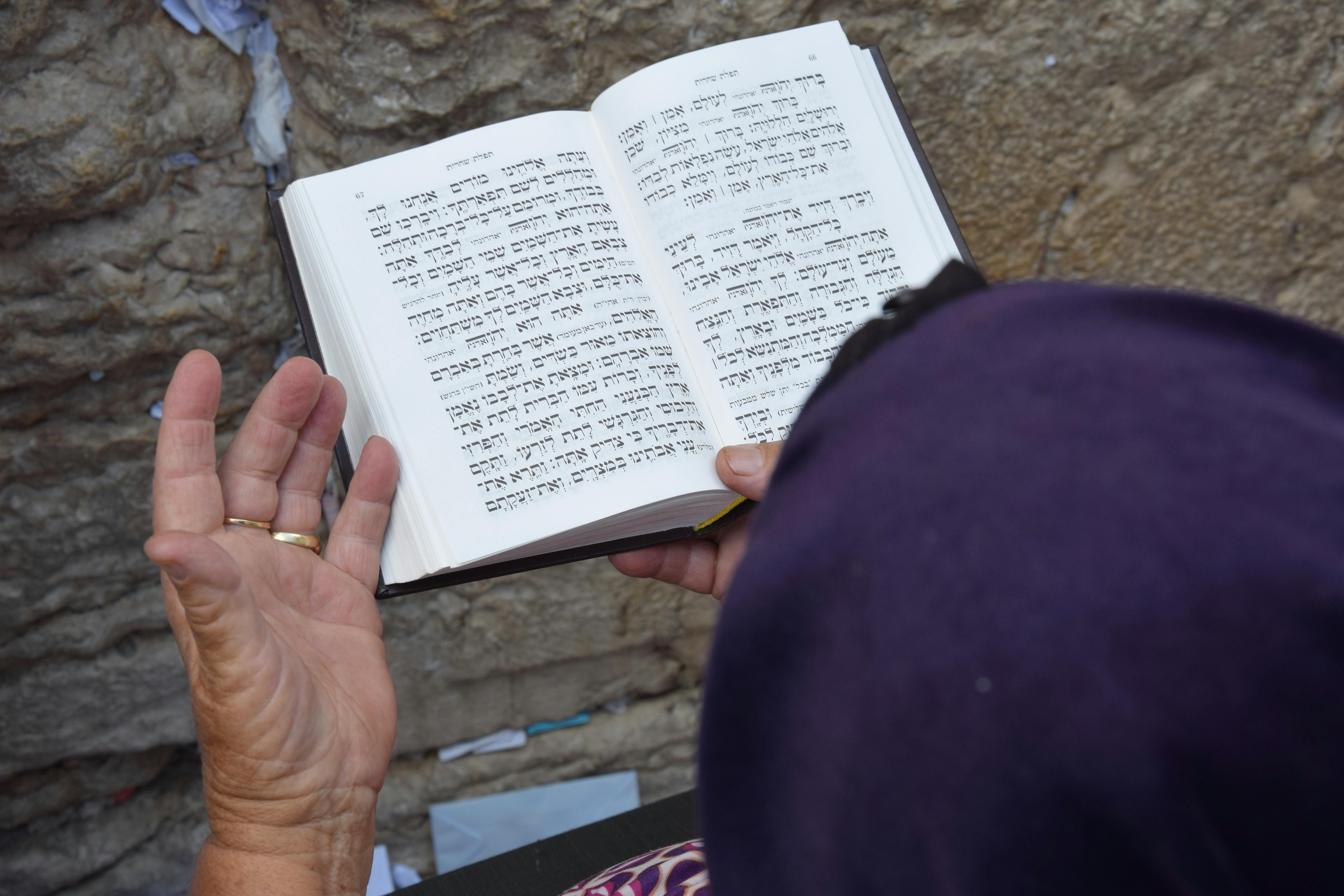
The Trouble with Prayer
I have a funny seat in shul. It faces everyone else. For years I was just involved in my own prayers so I would never really have much time to look out. But recently there have been moments during davening when I look up from my seat at the front of the shul and notice something uncomfortable. Not everyone is praying.
People are distracted. Some are silent. Some are waiting for the davening to end. Some seem emotionally absent from the experience altogether.
And I sometimes wonder: why is prayer so difficult for the human being?
After all, Jews have been praying for thousands of years. Prayer sits at the center of Jewish life. We speak about it constantly. We defend it philosophically. We teach our children to do it from the youngest age. Yet sincere, focused prayer often feels elusive even to deeply committed people.
I believe part of the problem may be the verbs we use when we think about prayer.
Usually, we describe prayer as something we say. Sometimes as something we do. But perhaps those are incomplete descriptions.
I would like to suggest two additional verbs that can fundamentally reshape the way we think about tefillah: to see prayer and to be prayer.
Seeing Prayer
Recently, I attended the wedding of the youngest daughter in a family from our community. As I stood there watching the dancing and joy, I was overcome with emotion. I found myself thinking about how many prayers it took to reach that special moment.
How many prayers did it take for the parents to find one another?
How many prayers accompanied the building of their home, the birth of their children, the health and growth of those children over decades?
How many tears, hopes, Tehillim, and whispered requests stood behind the simple image of parents walking their final child to the chuppah?
At that moment, I was not merely thinking about saying prayers. I was thinking about seeing prayers.
We often imagine prayer only at the moment it is uttered. But many prayers can only truly be understood years later, when they crystallize into lived reality.
This week is Yom Yerushalayim.
For nearly two thousand years, Jews prayed three times daily: “VeLiYerushalayim Ircha B’rachamim Tashuv.” Jews scattered across continents pleaded for a return to Jerusalem.
And then, in 1967, Jews suddenly found themselves once again standing before the Kotel, praying in the heart of Yerushalayim.
That moment was not simply the recitation of prayer. It was the physical manifestation of prayer.
Perhaps one reason prayer becomes difficult is because we fail to pause and notice when prayers are actually answered. We forget to recognize the tangible monuments built from decades and centuries of tefillah.
When we learn to see prayer, it gives us the strength to pray again.
Being Prayer
But there is another verb that may be even more transformative.
Not only to say prayer.
Not only to see prayer.
But to be prayer.
David HaMelech declares in Book of Psalms: “Va’ani tefillah” — “And I am prayer.”
What does it mean for a person to become a prayer?
We are so conditioned to imagine that prayers are answered only through overt supernatural intervention. The heavens split open. The music swells. A Divine voice emerges from the clouds.
But if we are honest, that is usually not how prayers are answered in real life.
When people pray desperately for a spouse, a job, a child, healing, or comfort, the answer often comes through another human being.
Someone introduces the couple.
Someone offers the opportunity.
Someone gives advice.
Someone donates money.
Someone visits.
Someone encourages.
Someone notices pain and chooses not to walk away from it.
In other words, many prayers are answered through human agency aligned with Divine providence.
The Almighty answers prayers through people who are willing to become part of the answer.
That means every human being faces a profound question: will I merely utter prayers, or will I also become one?
Will I live in a way that helps answer the cries of others?
There are people in this world who are waiting for something, and there are people who facilitate that something. To facilitate goodness, healing, opportunity, comfort, dignity, or connection for another person is, in a very real sense, to become a tefillah.
And perhaps when we begin living that way, our own prayers deepen as well. Prayer stops being only about asking. It becomes about participating in the Divine response to human need.
As we approach Yom Yerushalayim, perhaps we should think about prayer differently.
Not only saying prayer. But seeing prayer. And becoming prayer.
Picture Credit: Photo by Arjanne Holsappel from Pexels: https://www.pexels.com/photo/woman-holding-a-book-18649144/