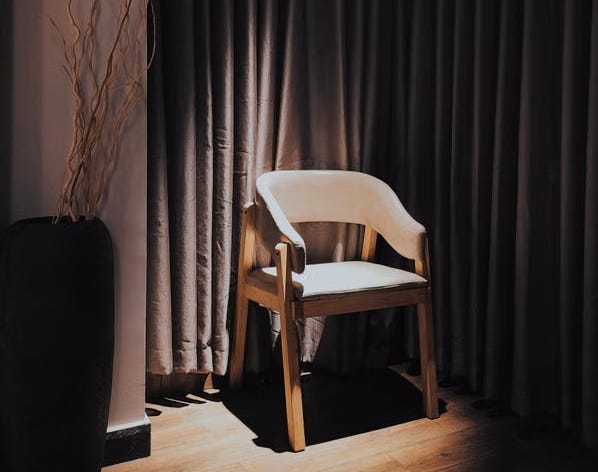
“A place in shul.” The phrase means very different things to different people. For some, it is a safe space: somewhere to pray comfortably, see friends and connect. For others, it is alienating, a reminder of the time they were asked to leave someone else’s seat. For still others, it stings because they feel they have no place in a shul at all.
In Torah thought, the phrase has a specific meaning, and it comes from this week’s parsha.
An Ancient Story
The Gemara (Berachos 6b) teaches that whoever fixes a place for his tefillah, Elokei Avraham b’ezro, the God of Avraham is his help. When such a person passes away, he is eulogized as an humble person, a pious person and a disciple of Avraham Avinu.
The source is the story with Avraham and the people of Sedom. He continued to pray for Sedom even after their destruction.He rose early, and returned to the place where he had stood before to pray (Bereishis 19:27). The Talmud deduces from here that Avraham had a set place for prayer.
This is not only philosophy. The Shulchan Aruch (Orach Chaim 90:19) rules it as halacha: a person should have a fixed shul, and within that shul a fixed place, which he should not change unless necessary.

Commitment, not convenience
Our culture prizes hyper individualism – prioritizing doing what I want, when I want, on my terms. Judaism asks for something more than that. Our relationship with the Almighty is on His terms: specific times and specific places. At its core, this is about commitment. What detracts from commitment today is convenience. Commitment means showing up when it is not convenient and not on my schedule. So, we return to the same shul and the same place rather than davening wherever is easiest: by the pool, in a neighbor’s basement on Friday night, anywhere that saves a few minutes of walking. What matters is not only that we davened, but when and how.
Commitment, not habit
The opposite error is just as real, and it often travels under the same banner.
A visitor comes to shul and sits down. Half an hour later the seat’s regular arrives and asks them to move. This happens in many shuls. The visitor leaves upset and never comes back. In the name of Avraham’s practice, we have abandoned hachnasas orchim, the hallmark of Avraham Avinu.
Halacha does not demand this. Firstly, a fixed place extends to four amos, about seven feet, so it need not be the exact seat. And it applies only where possible. If someone is already sitting there, their place and prayer take precedence. When one grows too attached to one’s place, it is not about commitment at all. It is about habit. I am used to this spot, you are disrupting my routine, so you have to move. Habit can look like commitment from the outside, but the two could not be further apart.
The balance
The Torah asks us to live a committed life, not a habituated one. We should not flow like water to wherever is convenient, fitting God in when it suits us. Nor should our commitment harden into a routine that serves our comfort rather than our avodah.
Which brings us back to a place in shul. Do we have one? And have we made room in it for others, for their commitment as well as our own?
Picture credit:
Photo by Kevin Yang from Pexels: https://www.pexels.com/photo/modern-minimalist-chair-in-dimly-lit-room-with-curtains-35340118/
Abraham Sees Sodom in Flames, James Tissot, 1896-1902