I’ll be honest. I was confused. For the last week we have been watching violent protests spread across France, and now Italy. As an observer far from the streets, I wanted to understand what was really going on, so I searched for the reason behind them.
The answer across mainstream coverage is pretty consistent. This is unrest among students and young people over the cost of housing, the cost of living, and the condition of their schools. It is the kind of thing that happens from time to time when young people feel they cannot make a decent living. CNN described weeks of student anger over crumbling schools, a shortage of teachers and poor job prospects. Al Jazeera framed it as a wave of cost of living protests across Belgium, Italy, Portugal and France.
That explanation is not false. It is incomplete.
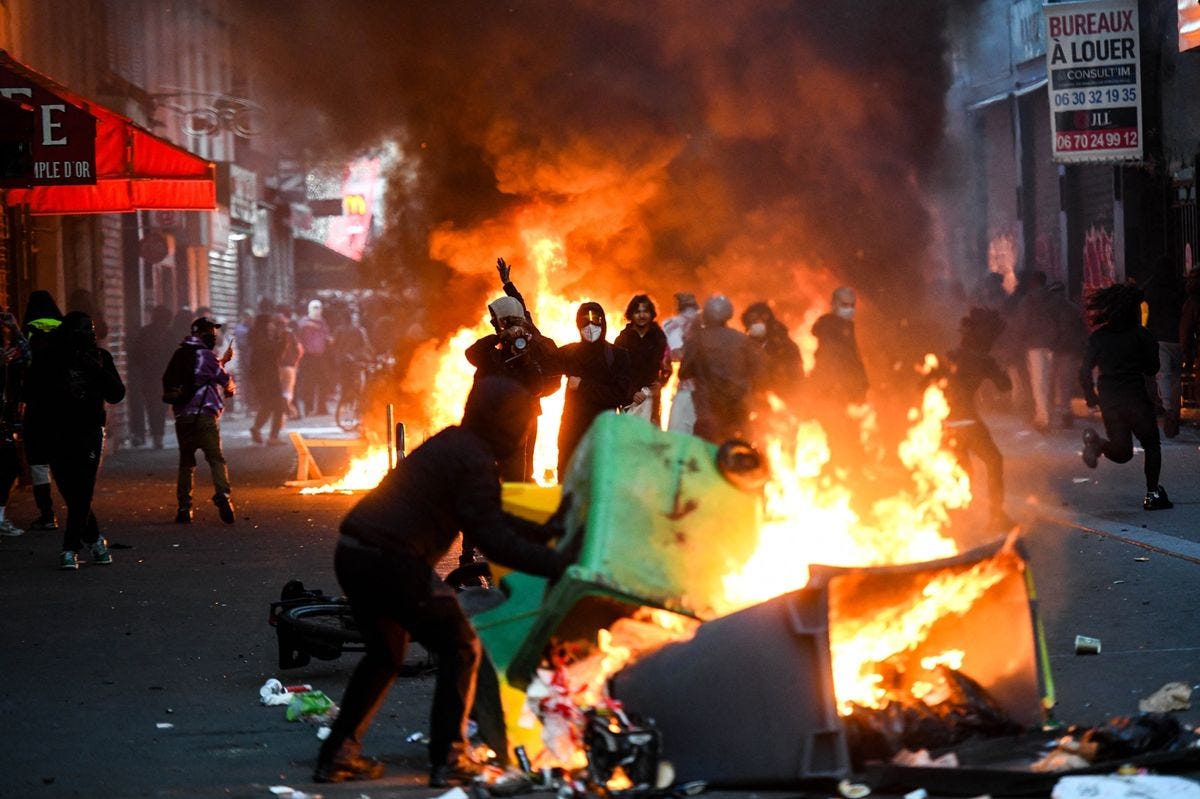
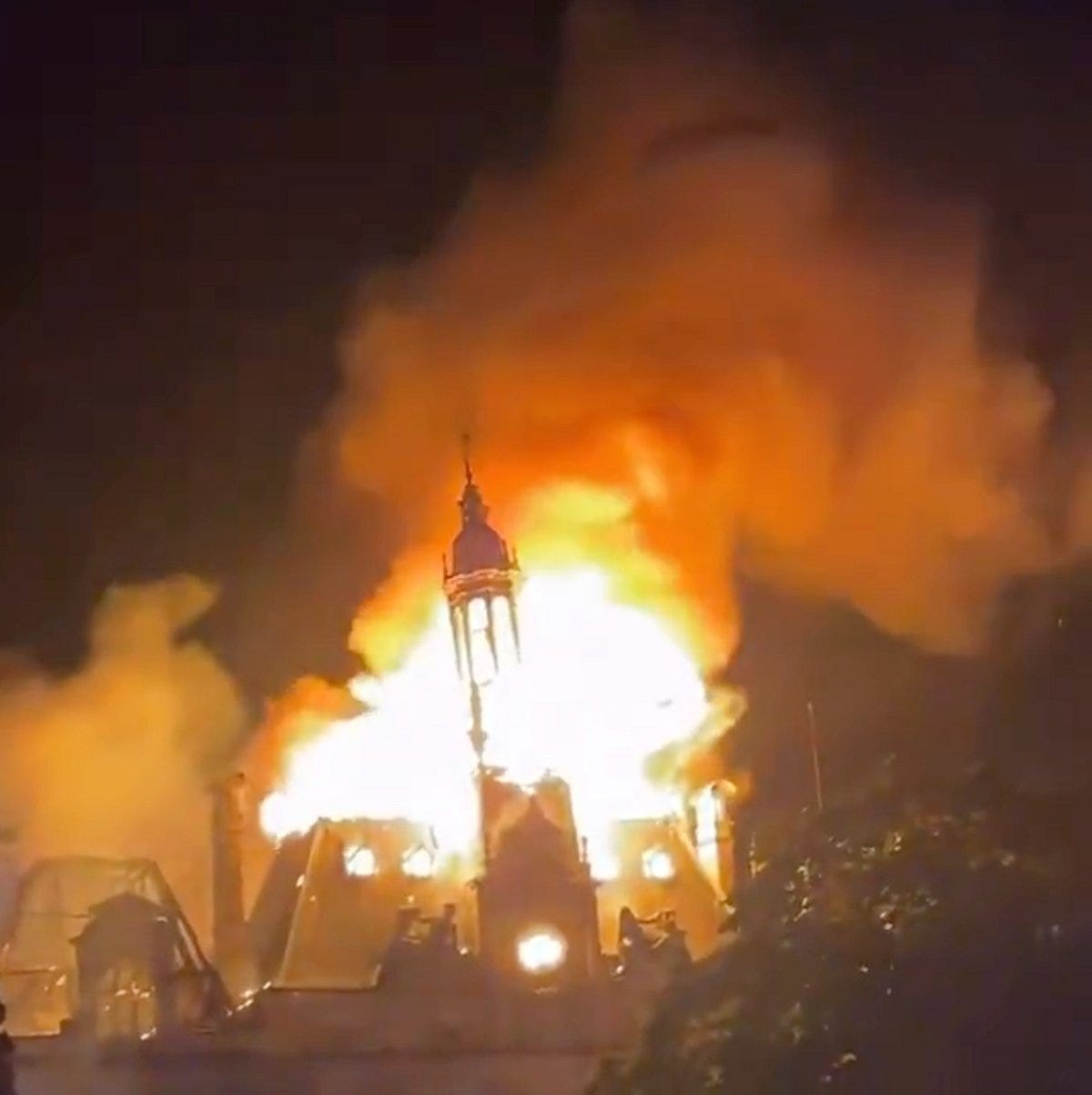
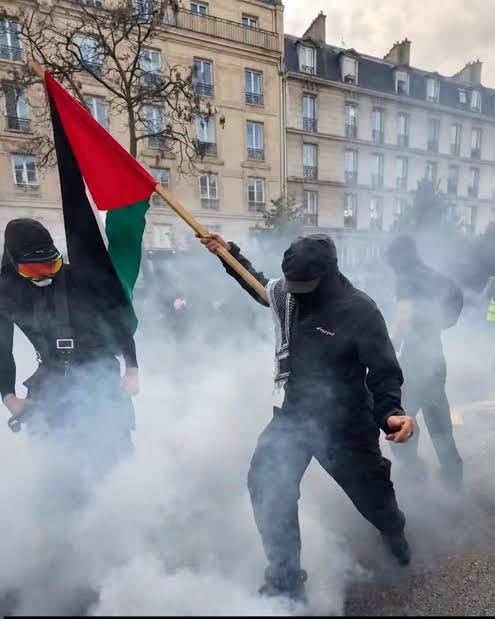
It does not explain why demonstrations turned into riots that set town halls on fire and looted more than 600 businesses in central Marseille alone. It does not explain why France’s Interior Minister reported more than 2,000 people detained and more than 600 police officers injured. It does not explain why so many of the rioters were masked, or why Palestinian flags appeared everywhere. In Paris, protesters stood atop the statue at Place de la République holding the French tricolor beside a Palestinian flag. The Times of Israel reported that Palestinian flags and keffiyehs were a recurring feature of most of the violent protests. Weeks earlier, Israel’s Minister for Diaspora Affairs warned that the high school blockades had become platforms for antisemitic incitement, with Palestinian flags, anti Israel chants, and in some cases swastikas.
Then there is what happened to Jews. A synagogue in Paris’s 19th arrondissement was broken into and ransacked, its prayer books and tefillin thrown on the floor. In Marseille, Jewish owned shops were set on fire. The French journalist Paul Amar alleged on CNews that on one street in Marseille every Jewish owned business was burned while Muslim owned shops were left untouched.
The backdrop is not in dispute. France’s Interior Ministry recorded about 1,320 antisemitic incidents in 2025, more than three times the number in 2022. In the first half of 2026 alone it recorded 533 antisemitic acts, 46 percent of all anti religious acts in the country, though Jews are less than one percent of the population. French Jews did not need these riots to tell them what Palestinian flags in a burning city mean.
I think we all know the answer. It is what we have been telling the rest of the world for a long time: the people you are marching alongside are not your allies.
How rebellions work
Rebellions are almost never the work of one group. The critical mass needed to overturn the status quo usually comes from several groups, each with its own agenda, converging in a perfect storm to move the needle.
The Torah gives us the template in the rebellion of Korach (Bamidbar 16). Korach, a Levite and a cousin of Moshe and Aharon, wanted the priesthood. Moshe says so directly: you seek the priesthood as well (Bamidbar 16:10). Rashi (16:1) explains that Korach was aggrieved that Elitzafan ben Uziel had been appointed prince of the Kehatite family instead of him.
Alongside Korach stood Datan and Aviram of the tribe of Reuven, who had no claim to the priesthood at all. Their complaint was against Moshe’s leadership itself: that he had taken them out of a land flowing with milk and honey to die in the wilderness, and now made himself ruler over them (16:13). Then there were 250 men, chieftains of the congregation (16:2), rallying under the slogan that the entire congregation is holy (16:3). Ibn Ezra (16:1) suggests they were firstborns who resented losing the sacred service to the Levites.
Three groups, fighting side by side, for completely different things.
This is how it has gone in rebellion after rebellion. Russia’s February Revolution of 1917 began in Petrograd with bread shortages and strikes. Most of the hungry crowds were not Bolsheviks; they could not put bread on the table. By October, Lenin’s disciplined minority had seized power, and in short order it suppressed the other socialist parties that had shared the streets with it.
In Iran, university students, professors, secular liberals and leftists marched in lockstep with Khomeini’s Islamists against the Shah. The Shah left the country in January 1979, and Khomeini returned from exile, a final stretch of which he had spent outside Paris. Within a short time the new regime turned on the liberals it had marched beside, and in 1980 it shut down the universities in what it called a Cultural Revolution. They had never shared the same values.
France today
It happens again and again, and it is happening in France now, to no one’s surprise who has been paying attention. The protests may well have begun with idealistic students staging sit ins over the rising cost of living, which is a real problem. But others are using the platform of what may have started as a peaceful protest, people with no interest in the success of France or of liberal democracy in the first place.
For years, those elements have worked their way into institutions of lower and higher education of Western democracies. They use the freedom of speech to protect their bigotry. On the whole, they are not interested in advancing those democracies. They want upheaval, to change them, and if necessary to burn them down.
This is happening across the Western world. The sooner the West stops explaining it away as just another episode of civil unrest and recognizes that burned city centers and attacks on Jews are the beginning of what comes when people who do not share your values gain power, the better its chances. Telling ourselves a story that does not match reality has a price.
The Jews are always the first. They are never the last. It pays to understand the dynamics of rebellion and unrest, and to take notice of the different agendas inside every crowd.